How to Spot Authentic Vintage Glassware: A Collector’s Quick Guide
Learn how to spot authentic vintage glassware with easy tips for collectors. From maker’s marks to color details, this guide helps you find genuine vintage treasures.
Collecting authentic vintage glassware is a joyful adventure for enthusiasts who appreciate the charm and history behind each piece. Whether you’re browsing thrift shops, estate sales, or hopping onto Whatnot events, knowing how to identify genuine vintage glassware can make all the difference in building a meaningful collection. This quick guide offers easy-to-follow tips to help you spot real vintage treasures and avoid common pitfalls.
Understanding What Makes Glassware Vintage
Before diving into identification techniques, it’s important to understand what “vintage” means in the world of glassware. Generally, vintage glassware refers to pieces produced from the early 1900s up through the 1970s or early 1980s. These items often showcase unique craftsmanship, distinct patterns, and materials that differ from modern glassware.
Common Vintage Glassware Types
Recognizing the types of vintage glassware helps narrow down your search and spot authenticity:
- Depression Glass: Known for its colored glass and geometric patterns, made during the 1920s-1940s.
- Milk Glass: Opaque white glass popular in the mid-20th century.
- Fire-King: Durable glassware with pastel colors produced by Anchor Hocking from the 1940s to the 1970s.
- Fenton Glass: Handcrafted glass featuring hobnail and other textures, mainly from the 1930s onward.
Key Tips for Spotting Authentic Vintage Glassware
Identifying authentic vintage glassware requires a keen eye and some insider knowledge. Here are some reliable tips collectors use to tell the real from the replicas.
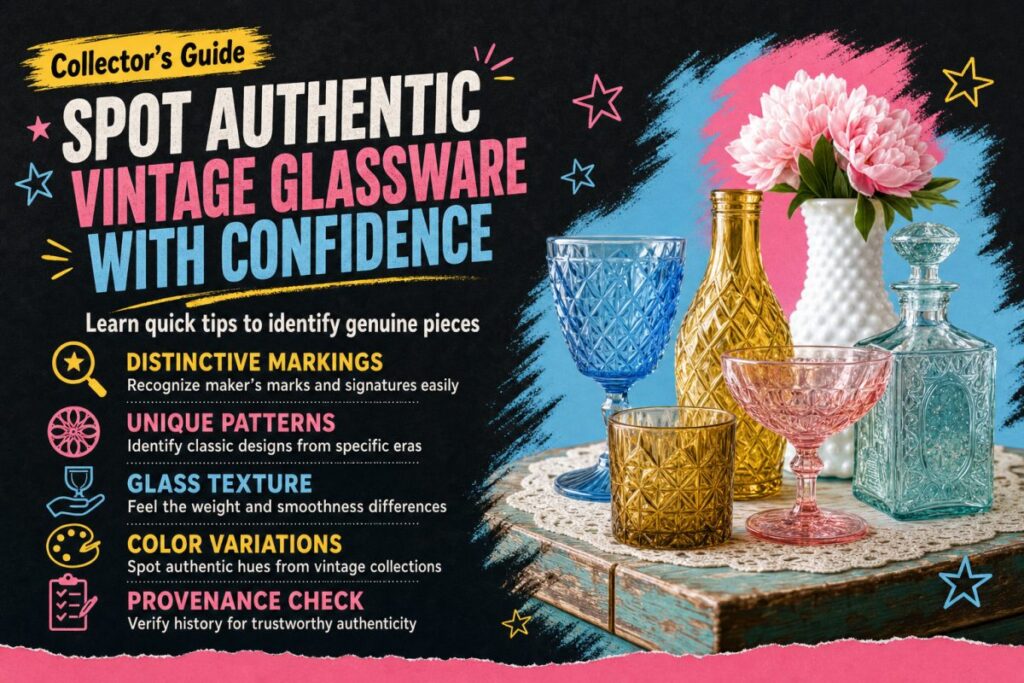
1. Look for Maker’s Marks and Signatures
Many vintage glass manufacturers stamped or etched their logos or maker’s marks on their pieces. These marks can be subtle and found on the base or underside of the item. For example, Fire-King pieces often have a raised Anchor Hocking logo, while Fenton glass may have a scripted “Fenton” mark.
Always compare marks with verified examples online or in collector guides to confirm authenticity.
2. Examine the Glass Quality and Weight
Vintage glassware often feels heavier and thicker compared to modern reproductions. The glass may have slight imperfections like air bubbles or uneven thickness—signs of handcrafting or older manufacturing techniques.
Modern glass tends to be lighter and more uniform, so trust your hands as much as your eyes when handling pieces.
3. Check the Color and Pattern Details
Authentic vintage glassware features distinctive colors and patterns that were popular during specific eras. For example, Depression Glass has pastel colors like pink, green, and amber with geometric motifs. Fire-King jadeite glass is a soft, milky green with a smooth finish.
Fakes might have colors that are too bright or patterns that don’t match known vintage designs. Use a magnifying glass if needed to inspect pattern crispness and detail.
Additional Tools and Resources for Collectors
Using the right tools and community resources can elevate your vintage glassware hunting skills.
1. Use a UV Light
Some vintage glassware, like Depression Glass, will fluoresce under ultraviolet light due to the presence of uranium or other materials used during production. This is a handy way to verify certain pieces.
2. Consult Collector Guides and Forums
Books, online forums, and social media groups dedicated to vintage glassware collectors offer invaluable insights. You can compare photos, ask questions, and get verification from seasoned collectors.
3. Shop with Trusted Sellers and Platforms
Shopping through reputable Whatnot shops like @luckyducksresale connects you with sellers who specialize in authentic vintage finds. Their expert curation reduces the risk of buying fakes and adds a fun community experience to your collecting journey.
Checklist: Quick Steps to Verify Authentic Vintage Glassware
Before adding a piece to your collection, run through this handy checklist:
- Identify any maker’s mark and verify it with trusted sources.
- Feel the weight and inspect the thickness—authentic vintage glass often feels substantial.
- Check for imperfections like air bubbles or uneven edges common in older glass.
- Match colors and patterns to those known from the production era.
- Use a UV light test if applicable to detect vintage materials.
- Ask questions in collector communities or from the seller.
- Trust your instincts—if a deal looks too good or the piece seems off, pause and research more.
Wrapping Up Your Vintage Glassware Quest
Collecting authentic vintage glassware is a rewarding hobby that connects you to the past with every beautiful find. By using these quick tips, you’ll sharpen your eye for genuine pieces and enjoy the thrill of discovery even more. Remember, the best finds come with patience and a little ducky luck!
Ready to dive into the world of vintage glassware? Visit our Whatnot shop at @luckyducksresale for curated collections and fun shopping events. Have questions or want to share your vintage finds? Drop us a line anytime at hello@luckyducksresale.com. Happy collecting!